

Custom Wedding Seating Chart Sign Cost: A 2026 Buyer's Guide
Last Updated: October 23, 2026
Quick Summary
Wedding seating chart sign cost depends on material choice, design complexity, size, and production timeline. Acrylic signs typically cost more but offer durability and keepsake value, while vinyl and printed options are more budget-friendly for one-time use. Plan 8-12 weeks ahead to avoid rush fees and account for hidden costs like shipping, hardware, and design revisions.
- Acrylic is the most durable and premium option; vinyl and printed signs are more affordable but less long-lasting.
- A 24" × 36" sign accommodates 50 guests; larger signs for 100+ guests cost significantly more.
- Bundled packages combining seating charts with welcome signs and table numbers save 10-15% versus ordering items separately.
- Professional production includes initial design and one to two revision rounds; additional revisions typically cost $25-$75 each.
- Order 8-12 weeks in advance to avoid rush production fees that can double your total cost.
Table of Contents
- What Drives Custom Wedding Seating Chart Sign Cost
- Wedding Seating Chart Sign Size and Display Format
- DIY Wedding Seating Chart Sign vs. Professional Production
- Seating Chart and Welcome Sign Bundle Pricing
- Full Cost Breakdown: Beyond the Base Price
- Material and Personalization Choices
- Durability, Reuse, and Long-Term Value
- Choosing the Right Option for Your Budget and Timeline
- Frequently Asked Questions
What Drives Custom Wedding Seating Chart Sign Cost
The price of a custom wedding seating chart sign depends on far more than just size. Material choice, personalization complexity, production method, and timeline all shape what you'll pay. Understanding these drivers helps you make decisions that align with your budget without sacrificing quality.
Couples often underestimate the full cost picture. They compare base prices across vendors without accounting for design revisions, shipping, hardware, or rush fees. The real cost emerges only when you add everything together.
Material and Finish Impact
Your material choice is the single biggest cost lever. Acrylic, vinyl, and printed options each carry different price points and durability profiles. Acrylic typically costs more upfront but offers a premium look and lasting durability. Vinyl is lighter and more affordable but may show wear over time.
The finish also matters. A matte acrylic costs less than glossy acrylic. Hand-painted details or specialty finishes like metallic edges add cost.
Design Complexity and Customization
A simple seating chart with standard fonts and one or two colors costs less than an intricate design with multiple custom fonts, hand-lettered elements, or elaborate borders. Each design revision extends production time and raises cost. If your vision involves multiple rounds of proofing or significant changes mid-process, budget accordingly.
Personalization, adding guest names, your wedding date, custom colors matching your palette, or unique fonts, increases complexity. The more specific your customization, the more design work is required. Simple templates are cheaper. Fully custom designs cost more but deliver exactly what you envision.
Wedding Seating Chart Sign Size and Display Format
Size drives cost in two ways: material usage and production complexity. A small tabletop sign uses less material and prints faster than a large-format wall display. Your guest count and venue layout determine the practical size you need.
Common Dimensions and Guest Count
A seating chart for 50 guests fits comfortably on a 24" × 36" sign. For 100+ guests, you'll need 36" × 48" or larger. Tabletop displays work for intimate gatherings under 75 guests. Large-format standing displays suit bigger receptions.
Larger signs cost more because they require more material and longer production time. A 24" × 36" sign costs less than a 36" × 48" sign of the same material.
Tabletop vs. Large-Format Display
Tabletop signs are compact and portable. They work well for cocktail hours or smaller venues. Large-format displays make a statement and are visible from across a room. They require more material and more production time, so they cost more.
Consider your venue layout. A small, intimate space suits tabletop signage. A large ballroom benefits from a statement-sized display. The format you choose should match your space and guest experience, not just your budget.
DIY Wedding Seating Chart Sign vs. Professional Production
You have three paths: printable templates you assemble yourself, semi-DIY options with professional printing, or fully custom professional production. Each trades cost against time, skill, and final quality.
Printable Templates and At-Home Assembly
Printable templates are the cheapest option. You download a design, customize it in a design tool, print it at home or a local print shop, and assemble it yourself. Cost is minimal, often under $50 for the template and printing.
The tradeoff is time and skill. You're responsible for design choices, printing quality, assembly, and durability. If you're comfortable with design software and have access to quality printing, this works.
When Professional Production Pays Off
Professional production costs more but delivers a polished, durable result. A custom wedding seating chart sign cost from a professional vendor includes design expertise, high-quality materials, proper finishing, and tested durability. You get a keepsake-quality piece, not a temporary printout.
Professional production makes sense if you want a cohesive look matching your wedding aesthetic, need durability for reuse or display afterward, or lack design confidence. The investment pays dividends in peace of mind and final quality.
Seating Chart and Welcome Sign Bundle Pricing
Many vendors offer coordinated packages that bundle a seating chart with a welcome sign, table numbers, or direction signage. Bundling typically costs less per item than ordering individually because vendors reduce setup and production overhead.
What's Included in Coordinated Packages
A typical bundle includes a seating chart sign, a welcome sign, and sometimes table numbers or directional signage. All pieces share a cohesive design language, matching colors, fonts, and personalization. This unified look elevates your entire wedding aesthetic.
Bundles often include coordinated customization. Your names, wedding date, and color palette appear consistently across all pieces. This consistency requires less design work than creating entirely separate pieces, which is why bundles offer savings.
Bundle Savings vs. Individual Orders
Bundling saves money because vendors consolidate design work and production runs. Ordering a seating chart, welcome sign, and table numbers separately means three separate design sessions and three production setups. Bundling combines these into one workflow.
The savings vary by vendor. Some offer 10-15% off bundled orders. Others offer deeper discounts for larger packages. Compare bundled pricing to individual items before committing. Sometimes ordering à la carte makes sense if you only need one or two pieces.
Full Cost Breakdown: Beyond the Base Price
The base price you see online is just the starting point. Hidden costs add up quickly. Understanding the full picture prevents sticker shock at checkout.
Design, Revisions, and Proofing
Professional vendors include initial design in their base price. Most include one or two rounds of revisions. Additional revisions cost extra, typically $25-$75 per revision depending on complexity.
Proofing, the step where you review the design before production, is usually included. Rush proofing (same-day turnaround) may cost extra. If you're ordering close to your wedding date, budget for expedited proofing.
Shipping, Hardware, and Rush Fees
Shipping costs depend on sign size, material weight, and distance. Large acrylic signs cost more to ship than small printed signs. Standard shipping takes 5-10 business days.
Hardware, stands, easels, or wall-mounting brackets, may be included or sold separately. Some vendors charge $10-$30 for display hardware. If your sign doesn't include mounting hardware, budget for it separately.
Rush production fees apply if you order close to your wedding date. Plan ahead to avoid rush fees.
Material and Personalization Choices
Your material and personalization decisions shape both cost and final appearance. Each option serves different needs and budgets.
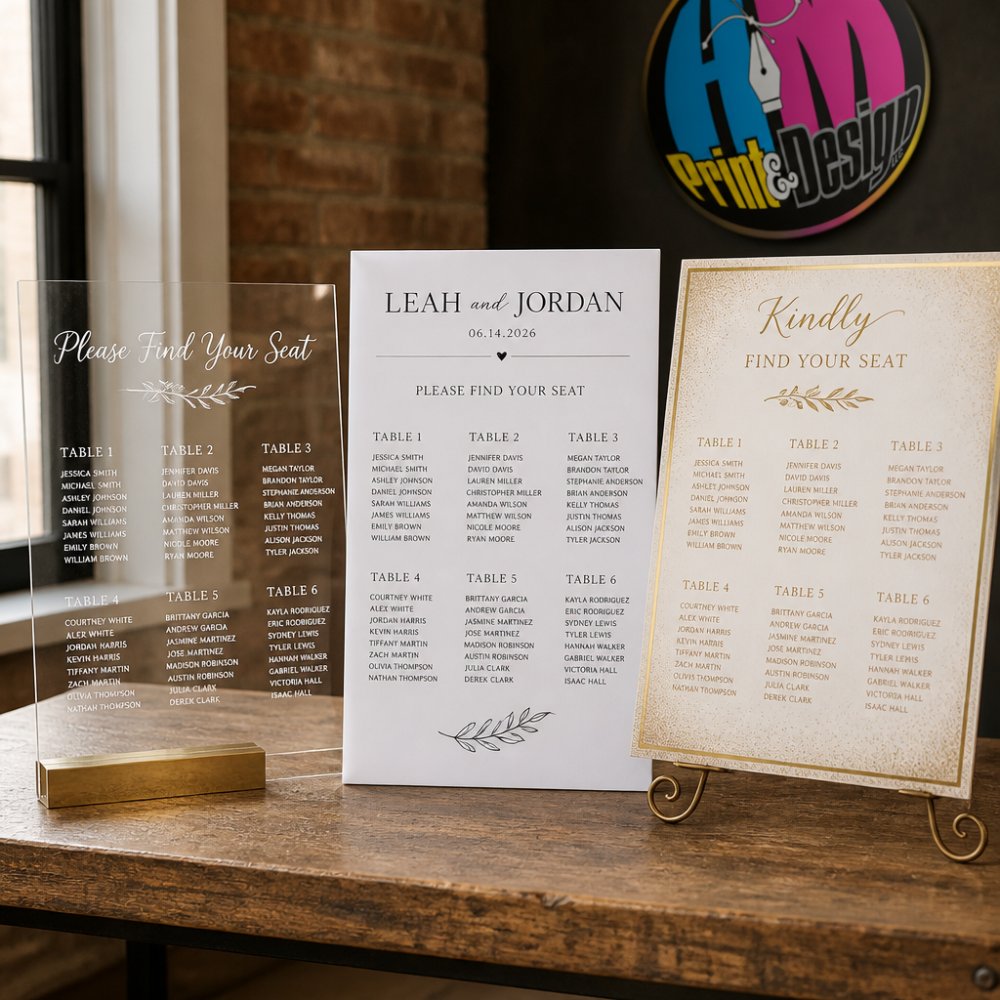
Acrylic, Vinyl, and Printed Options
Acrylic offers a premium, modern look. It's durable, elegant, and reusable. They're ideal for couples who want a keepsake or plan to display the sign in their home afterward.
Vinyl is lightweight and affordable. It works well for temporary displays. Vinyl can fade over time if exposed to sunlight, so it's best for indoor use.
Printed options on cardstock or specialty paper are the most budget-friendly. They're ideal for one-time use and tight budgets.
Names, Colors, Fonts, and Custom Design
Personalization includes adding guest names, your wedding date, custom colors matching your palette, and unique fonts. Each element adds design complexity.
Simple personalization, one or two colors, a standard font, your names, costs less. Complex personalization, multiple custom fonts, gradient colors, hand-lettered elements, or intricate borders, costs more because it requires more design time.
Custom design (fully unique artwork rather than template-based) commands a premium. You're paying for original creative work. Template-based customization is cheaper because the design framework already exists.
Durability, Reuse, and Long-Term Value
Think beyond the wedding day. Will you display this sign in your home afterward?
Acrylic and metal signs last decades with minimal care. They're ideal if you plan to display your seating chart as a keepsake.
Vinyl and printed signs are temporary. They work for one-time use but degrade over time.
Consider the cost-per-use. A $300 acrylic sign used and displayed for 20 years costs $15 per year.
Choosing the Right Option for Your Budget and Timeline
Start with your budget and timeline. Work backward to determine what's realistic. If you're getting married in 8 weeks, rush fees apply. If you're getting married in 6 months, you have time for standard production and no rush premium.
Common Mistakes to Avoid
Mistake 3: Underestimating design complexity. Vague vision leads to multiple revisions and extra costs.
Mistake 5: Forgetting hidden costs. Shipping, hardware, revisions, and rush fees add up.
A custom wedding seating chart sign cost reflects material quality, design complexity, production method, and timeline.
HM Print & Design LLC specializes in hand-crafted custom signage that combines quality materials with distinctive design.
| Factor | Impact on Cost | Budget Strategy |
|---|---|---|
| Material (acrylic, vinyl, printed) | High | Choose acrylic for keepsakes, vinyl/printed for one-time use |
| Sign size | High | Match size to guest count and venue; smaller = lower cost |
| Design complexity | Medium | Use templates for simplicity; custom design costs more |
| Timeline | Medium | Plan 8-12 weeks ahead to avoid rush fees |
| Revisions | Low to Medium | Be specific in feedback to minimize revision rounds |
| Shipping and hardware | Low to Medium | Budget separately; large signs cost more to ship |
Frequently Asked Questions
How much does a custom wedding seating chart sign typically cost?
Custom wedding seating chart sign pricing depends on material, size, design complexity, and production method. Printed options generally cost less than hand-crafted pieces like CNC-carved or plasma-cut signs. Pricing also factors in personalization (names, colors, fonts), design revisions, shipping, and rush fees. For an accurate quote tailored to your guest count and preferences, contact HM Print & Design LLC directly through their website.
Is it cheaper to make a DIY wedding seating chart sign or buy a professionally made one?
DIY printable seating chart signs cost less upfront if you have cardstock, frames, and printing supplies at home. However, professional production offers durability, custom materials like acrylic or carved wood, and finished quality that DIY rarely matches. If your timeline is short or you want a heirloom-quality piece, professional production often delivers better value despite higher initial cost. Consider your skills, available time, and how you want the sign to look in photos.
What size should a wedding seating chart sign be?
Seating chart sign size depends on guest count and venue layout. A chart for 75-100 guests typically works well at 24 by 36 inches, while larger weddings may need 30 by 40 inches or bigger. Tabletop displays range from 11 by 14 inches to 18 by 24 inches for smaller guest lists. Consider your entry space, lighting, and readability from 10 feet away. Discuss sizing with your designer to ensure names and table assignments are legible without overwhelming the space.
Do wedding seating chart and welcome sign bundles save money compared to ordering separately?
Coordinated seating chart and welcome sign bundles often provide savings through package pricing and streamlined production. Bundling also ensures design cohesion, matching colors, fonts, and materials across both signs. You'll typically save on design fees since one design direction covers both pieces. Compare the bundle price to individual sign costs, factoring in shipping. Many custom shops offer bundle discounts, so requesting a quote for both together is worth doing.
