

How to Order Small Custom Batches Step by Step
Quick Summary
To order small custom batches, define your specifications first, including item type, quantity, size, material, artwork and deadline. Then compare written quotes using a common template, confirm the minimum order quantity, approve a proof or sample, and plan lead time backward from your needed-by date.
- Write down item type, quantity, dimensions, material, text and deadline before requesting any quote.
- Fill in every row of the quote template and divide the total by quantity for an all-in cost per piece.
- Ask whether the setup fee can be shown separately, since it can lower a minimum order quantity.
- Approve a proof or sample in writing before full production starts.
- Work backward from your deadline, allowing for proofing, production, shipping and a one-week buffer.
Table of Contents
- What a Small Custom Batch Is and Who Orders One
- Step 1: Define Your Specifications Before You Ask for a Price
- Step 2: Build a Custom Order Quote Template to Compare Suppliers
- Step 3: Check Minimums and Find Flexible Suppliers
- Step 4: Approve a Custom Product Sample Before Full Production
- Step 5: Plan Around Small Batch Production Lead Time
- Booking Your Small Batch Order With HM Print & Design LLC
- Frequently Asked Questions
What a Small Custom Batch Is and Who Orders One
Last Updated: November 5, 2026
A small custom batch is a short production run of personalized items, typically from a few pieces up to a couple hundred, made to your own design or specifications.
The common thread is that the buyer needs something made to order, but not in volume. That makes the process different from buying off the shelf, and a few details matter more than they would for a standard purchase.
Step 1: Define Your Specifications Before You Ask for a Price
Before you contact any shop, write down exactly what you want. Vague requests produce vague quotes that are hard to compare.
Start with the basics:
- Item type: sign, print, decor piece, or apparel
- Quantity: the number of finished pieces you need
- Size and dimensions: width, height and depth, in inches
Attach reference images when you can. A photo of a similar piece, a color swatch or a rough sketch tells a shop more than a paragraph of description.
A common mistake is to leave the quantity open.
Step 2: Build a Custom Order Quote Template to Compare Suppliers
Quotes rarely look alike. One shop may list a per-piece price, another a flat fee, and a third may leave out shipping.
Use a table like this for each quote you receive:
| Line item | Supplier A | Supplier B | Supplier C |
|---|---|---|---|
| Quantity | |||
| Unit cost | |||
| Setup or design fee | |||
| Proof or sample fee | |||
| Shipping or delivery | |||
| Taxes | |||
| Total cost | |||
| Production lead time |
Fill in every row, even if the answer is "included" or "$0." Ask for any missing figure before comparing.
Divide the total cost by your quantity to get an all-in cost per piece, which includes the fees a low unit price can hide.
Pricing for HM Print & Design LLC depends on quantity, materials, dates and delivery.
Step 3: Check Minimums and Find Flexible Suppliers
Many custom shops set a minimum order quantity (MOQ), from 25 or 50 pieces down to a single item. If your need falls below a shop's minimum, ask whether it can be waived, increase your order to the minimum, or find a shop that handles small runs regularly.
Ask these questions when you contact a supplier:
- What is your minimum order quantity for this product?
- Is there a setup or design fee, and does it apply to small runs?
- Do you accept single-piece or one-of-a-kind orders?
Check a supplier's site and customer questions to see whether small orders are common.
How to negotiate a minimum down
Most minimums reflect a setup cost the shop has to recover: a screen or plate, a cutting die, a digital press setup, or a color-matching run. A common pattern is that a shop will lower the unit minimum if you cover the setup fee separately.
Try these tactics in order, from least to most disruptive:
- Ask for the setup fee as a separate line. If the shop quotes a 50-piece minimum at $4 per piece, ask what the price would be for 20 pieces with the setup charged once. You may pay more per piece but less in total.
- Offer to combine items into one run. If you need 10 signs in three designs, ask whether the shop will treat them as one 30-piece run with shared setup. Many shops will, because the press or cutter is set up once.
- Offer a repeat-order commitment. A shop is more willing to break a minimum for a buyer who says, in writing, that a larger reorder will follow if the sample is approved. Do not promise volume you will not place.
- Ask about off-peak scheduling. A shop with a slow week may take a small run it would decline in a busy month. Ask whether the order can be scheduled for a slower window in exchange for a lower minimum.
- Supply print-ready artwork. If you remove design labor from the job, the shop's cost drops and the minimum often follows. Ask what file format and resolution it needs before you send anything.
Outreach script you can copy
A short, specific message gets a better answer than a vague inquiry. Use this structure:
Hello, I am looking to order [quantity] [item type] in [material], sized [dimensions], with [text/artwork description]. My needed-by date is [date]. I noticed your listed minimum is [number]; my quantity is below that. Can you quote the order with the setup fee shown separately, and let me know whether supplying print-ready artwork would change the minimum? I am also happy to consider a slightly larger quantity if the per-piece cost drops. Thank you.
That message shows you are a serious buyer, gives the shop the numbers it needs to quote, and signals flexibility on quantity without committing you to a number you do not want.
Where to find flexible suppliers
- Local print and sign shops. Small independent shops often take short runs because they are set up for one-off jobs. Ask in person or by phone; a counter conversation reveals flexibility faster than a web form.
- Online short-run printers. Many web-to-print services publish their minimums openly and specialize in runs from one to a few hundred. Compare their published setup fees before you inquire.
- Maker marketplaces and custom shops. Sellers who list personalized items usually accept single-piece orders by design. Read the listing's processing time and personalization fields carefully.
Watch out: if a shop waives its minimum without explaining why, get the lead time in writing before you agree.
For more on how print shops set their minimums and how to work with vendors, see Small Business Administration guidance on working with vendors.
Printing and sign production orders work with the same planning, so you can request the same quote structure from every supplier you consider. HM Print & Design LLC offers its custom printing options for smaller runs, and you can review its business card ordering options when you need a short print run.

Step 4: Approve a Custom Product Sample Before Full Production
Ask for a proof or sample before the full run starts. A proof is a digital mockup or printed test. A sample is a physical piece made from the actual material.
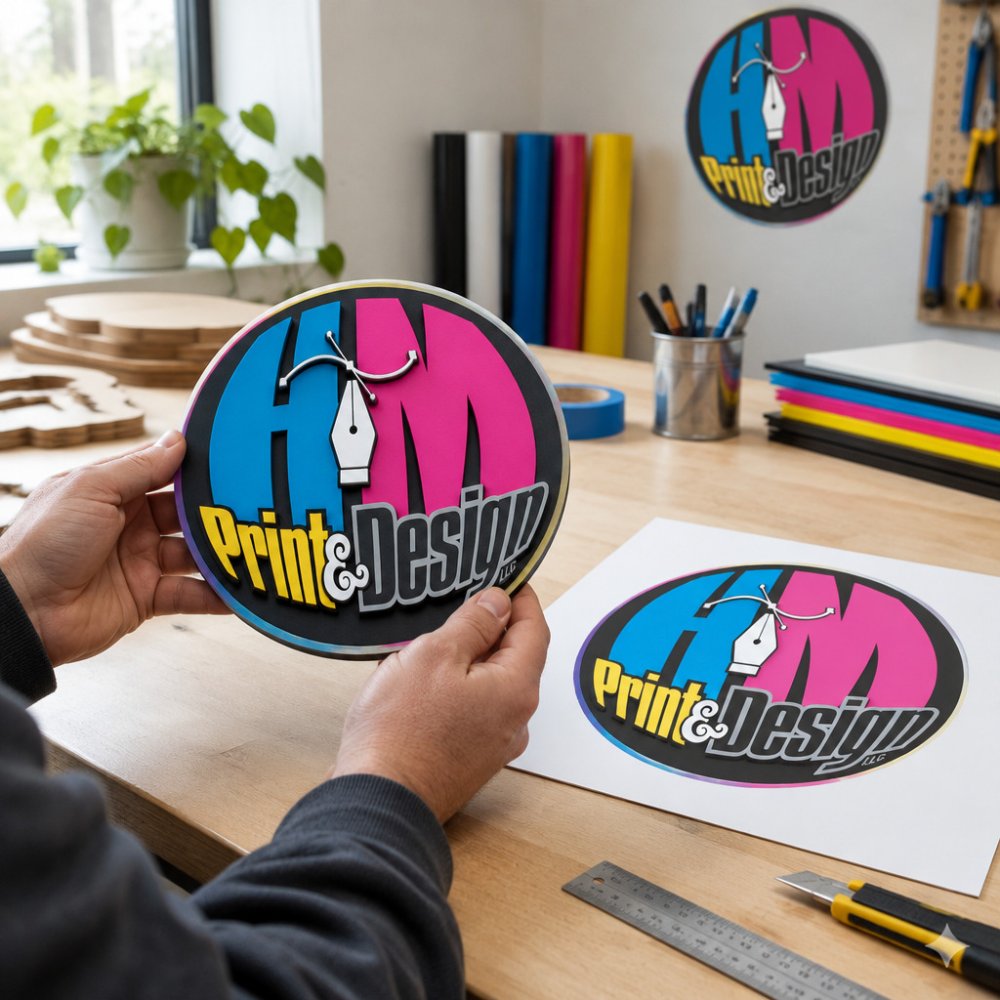
Check these points before you approve:
- Spelling, punctuation and names
- Font size and line spacing
- Color accuracy against your reference
- Size and placement on the finished piece
Put your approval in writing, by email or signed proof, and keep a copy. If the shop makes a change after approval, the written record shows what you agreed to.
Step 5: Plan Around Small Batch Production Lead Time
Production lead time is the number of days between approving your order and receiving it. Small batch lead time includes design, proofing, production, finishing and shipping.
Work backward from your deadline:
- Set your needed-by date.
- Subtract shipping time.
- Subtract production and finishing time, which your supplier should state in the quote.
- Subtract proofing and sample approval time.
- Give yourself a buffer of at least one week for corrections.
A common mistake is to plan only around the production window and forget proofing and shipping.
Ask each supplier to confirm lead time in writing; a clear timeline you can plan around beats a vague estimate.
Build quality control into the timeline
Small runs fail in ways large runs do not, because there is no spare inventory to swap a bad piece. Plan quality checks at three points, and put each one on the calendar:
- Before production: approve the proof or sample in writing. Check spelling, punctuation, names, font size, line spacing, color against your reference, size and placement, and edges and corners. Ask the shop to state the acceptable color variance in writing; a common pattern is that digital and screen printing vary slightly from a screen proof, and you want to know the tolerance before you approve.
- During production: ask for a photo of the first finished piece from the actual run, not just the sample. This catches a material or color change that happened after approval. Build one business day into the schedule for this check.
- On receipt: inspect against the approved proof within 48 hours of delivery. Count the pieces, check dimensions with a tape measure, compare color under the same lighting you will display the item in, and photograph any defect before you unpack further.
What to do when a piece is defective
Know your remedy before you order, not after. Ask the shop in writing:
- What is your defect policy, and what counts as a defect versus an acceptable variation?
- Will you remake, refund, or credit a defective piece?
- Who pays return shipping on a defective item?
- What is the window for reporting a problem?
A defect close to your deadline can still cost you time, so ask about remake timing before you order. If the order is for a dated event, ask whether the shop will prioritize a remake and ship it at the original service level.
Set acceptable tolerances up front
Ask the shop to confirm, in the quote or proof approval:
- Dimensional tolerance, such as plus or minus one-eighth inch on a cut sign
- Color tolerance against a Pantone or supplied swatch
- Acceptable variation in natural materials such as wood grain or stain
- Whether hardware, hanging mounts, or packaging are included
Writing these down turns a subjective argument at delivery into a checklist both sides agreed to, and makes two suppliers comparable.
Watch out: approving a proof by phone or in passing leaves no record, so keep every approval in email.
Reorder economics
If you expect to reorder, ask the shop to note your approved specifications and artwork on file.
Booking Your Small Batch Order With HM Print & Design LLC
Once you have your specifications, a completed quote template and a timeline, you are ready to order. HM Print & Design LLC offers signs, custom printing and personalized decor.
To book, start by sending your specifications, quantity options, reference images and deadline through HM Print & Design LLC's website. Browse the custom wall art and personalized decor if you are comparing finished pieces against your own design.
Frequently Asked Questions
How do I find a supplier that accepts small custom orders?
Start by asking suppliers directly whether they take small custom orders and what their minimum order quantity is. Many shops set minimums by product type, so a minimum for printed signs may differ from one for metal or resin pieces. Ask for the minimum in writing, confirm whether setup fees apply, and compare how each shop handles single-item or short-run requests. Shops that serve weddings, events, and small businesses often have more flexible minimums than high-volume manufacturers. Share your quantity and deadline early so the shop can tell you quickly whether the job fits their process.
What information should I provide when requesting a small-batch quote?
Give the supplier your product type, dimensions, material preference, quantity, color or finish, text or artwork, and the date you need the order. Include any delivery location and whether you need pickup or shipping. The more complete your request, the more accurate the quote will be. Pricing depends on quantity, dates, and delivery, so ask for a quote that breaks out setup, production, and shipping. For current prices or a quote on your project, contact HM Print & Design through its website.
Should I request a sample or proof before approving a small batch?
Yes. A proof or sample shows you the spacing, color, and finish before the full run is produced. Review the proof against your original file at actual size, check spelling and alignment, and confirm any finish details in writing. Approving a proof in writing protects both you and the shop, because the approved version becomes the reference for production.
What file format should I send for a custom printing order?
Confirm the file format your shop accepts before you design, and keep a copy of the final approved file so reorders match the original exactly.
